Every time someone gets rushed into an emergency room after a car accident, a stroke, or a bad fall, somewhere down the line a radiologist has to look at a scan. A CT scan. An X-ray. Sometimes both. They study the images, identify what is wrong, write it up, and pass it along so doctors can act. It is painstaking work. And for decades, it has been entirely human.
That is starting to change. And the speed at which it is changing might surprise you.
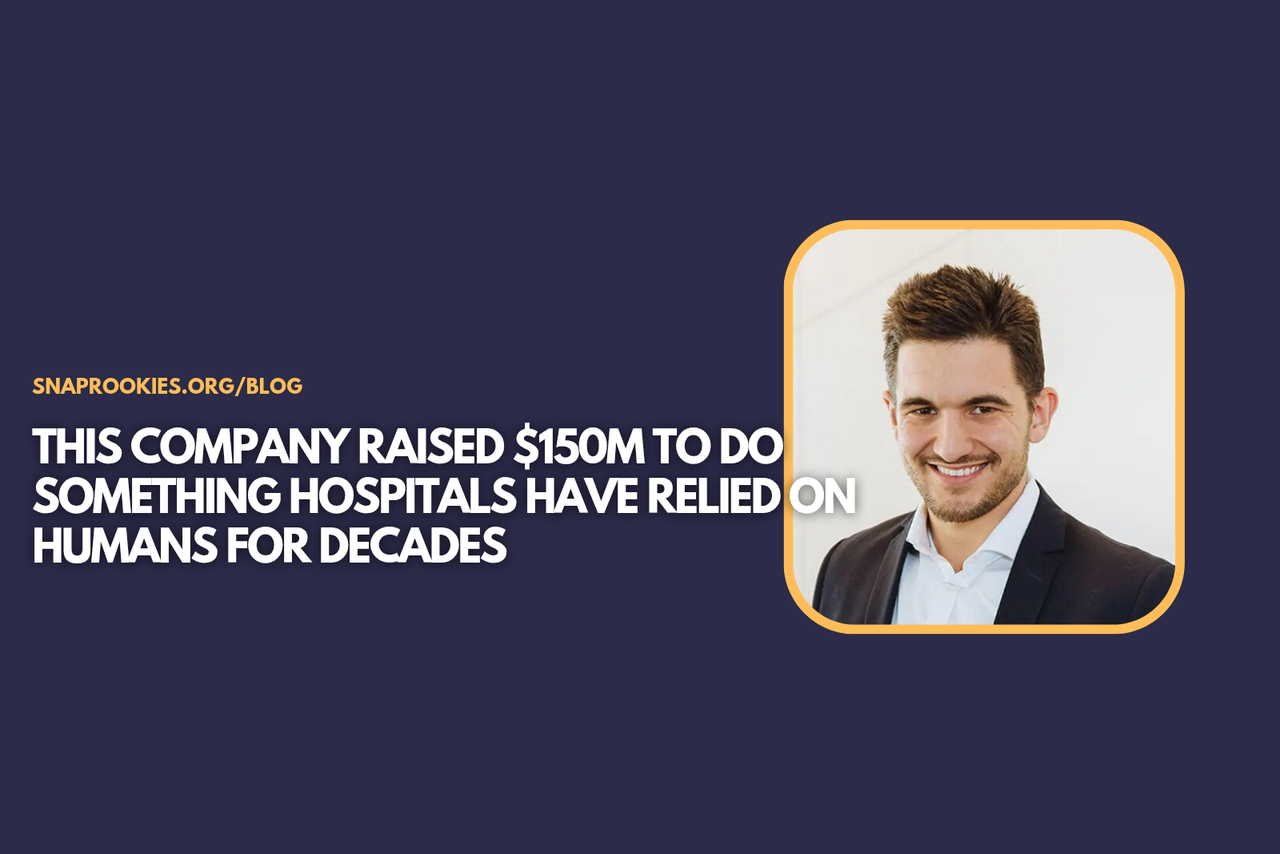
A company called Aidoc just raised $150 million in fresh funding. The round was led by Goldman Sachs, with money also coming in from General Catalyst, SoftBank, and NVentures, which is NVIDIA’s venture arm. This are investors. Those are groups that tend to show up when something is starting to scale in a serious way.
Advertisement
SO WHAT DOES AIDOC ACTUALLY DO?
At its core, the company has built AI software that reads medical images. CT scans. X-rays. The same images that a radiologist would sit down and work through, one by one. Aidoc’s system analyzes those images, looks for abnormalities, and flags what it finds. If something looks urgent, it gets surfaced faster. If a scan shows signs of internal bleeding, a pulmonary embolism, or a stroke, the system is designed to catch it and make sure the right people know about it quickly.
The idea is not to replace doctors. That is the line you will hear from every company in this space, and to be fair, it is probably mostly true, at least for now. The pitch is more about speed and volume. Radiologists are busy. Hospitals are stretched. Imaging volumes keep climbing while the number of trained specialists has not kept pace. So the hope is that AI can work alongside those specialists, handling the initial sweep of images so that humans can focus their attention where it is most needed.
Aidoc has been at this for a while. The company was founded in 2016 and has been building out its platform ever since. By now, its technology has been used to analyze over 110 million patient cases. It is deployed in nearly 2,000 hospitals worldwide. That is not a pilot program. That is a real footprint.
They also have 31 FDA clearances for different use cases, which matters more than it might sound. Getting FDA clearance for a medical AI tool is not a fast or easy process. Each clearance covers a specific clinical use: emergency department triage, detecting certain conditions on abdominal scans, flagging potential strokes, and so on. The fact that Aidoc has accumulated 31 of them tells you they have been doing the unglamorous regulatory work required to actually operate inside healthcare, not just demo at conferences.
The $150 million they just raised brings their total funding to over $500 million. And notably, this comes less than a year after their previous funding round. That cadence is worth paying attention to.
SO WHAT IS THE MONEY FOR?
A chunk of it is going toward navigating more of that regulatory process and expanding the range of conditions their AI can detect. Another piece is going toward scaling globally. Hospitals outside the U.S. are dealing with the same pressures: too many images, not enough specialists, growing patient populations.
But the part that is most interesting, and maybe the part that will raise the most questions, is what they are building next. Aidoc is developing automated draft report creation. Meaning the AI does not just flag what it sees. It starts writing up what it found.
Right now, after a radiologist reviews a scan, they dictate or type a report summarizing their findings. That report goes to the referring physician, who uses it to make decisions about treatment. It is a critical document. And Aidoc wants AI to be drafting the first version of it.
That is a different kind of task than flagging an abnormality. Writing a report requires synthesizing findings, contextualizing them, and communicating in a way that another clinician can act on. It is a step deeper into the workflow than most people probably realize this technology has gotten.
Advertisement
HERE IS WHERE IT GETS COMPLICATED
Diagnostic errors are a serious problem in medicine. The estimate you will see cited is that roughly 400,000 people die in the U.S. each year from errors and delays tied to diagnosis. That is not a made-up number to sell AI software. It reflects real failures in a system that is overloaded, understaffed in key areas, and dealing with an ever-growing amount of imaging data to sort through.
If AI can catch things that get missed, that is meaningful. If it can catch them faster, that is also meaningful. In emergency settings especially, time matters enormously. A stroke detected twenty minutes earlier can be the difference between a full recovery and permanent damage.
But there is an obvious tension sitting underneath all of this. When a radiologist misses something on a scan, there is a human being accountable for that. When an AI misses something, it is murkier. Who is responsible? The hospital that deployed the system? The company that built it? The doctor who trusted the flag that never came? These are not hypothetical questions. They are the kind of questions that will have to be worked out in courtrooms and regulatory agencies as this technology spreads.
There is also a subtler concern. The more hospitals rely on AI to do the initial read, the less that radiologists are actually doing that initial read themselves. Over time, does that change how those skills develop? Does it change what gets caught when the AI gets it wrong and a human has to step in? These are slow-moving questions, but they are real.
THE COMPETITIVE PRESSURE IS PICKING UP
The competitive pressure in this space is picking up. GE HealthCare recently completed a $2.3 billion acquisition of a medical imaging company. Siemens Healthineers has built out its own radiology software suite. A startup called RadAI raised $60 million not long ago. Everyone is betting that the future of medical imaging involves a lot more automation than the present does.
Aidoc’s angle is that it has already done the hard part of getting into hospitals at scale and earning the regulatory clearances that actually let it operate there. Its CEO has said publicly that by 2030, he wants every complex diagnostic decision to have AI support behind it. That is not a modest goal.
WHAT THIS ACTUALLY MEANS
For as long as hospitals have had radiology departments, the model has been the same: a trained specialist looks at an image and tells you what they see. That specialist went to medical school, did a residency, built up years of pattern recognition, and takes professional and legal responsibility for their read. That is a deeply human function.
What is being built now is a system where software does that work first, or eventually, maybe, does a meaningful portion of it outright. The humans are still in the loop, at least for now. But the loop is getting reorganized in ways that are not fully visible yet.
Is that a good thing? Probably, in a lot of cases. The system as it exists is already failing patients in real and measurable ways. If AI catches things that get missed, people live who might not have. That is not nothing.
Advertisement
But it is also a shift that is happening fast, and the full picture of what it means for patients, for doctors, and for how we think about accountability in medicine has not been written yet.
The money is in. The hospitals are deploying. The question of whether this actually works as well as it needs to is one we are all going to find out the answer to together.